Filter by
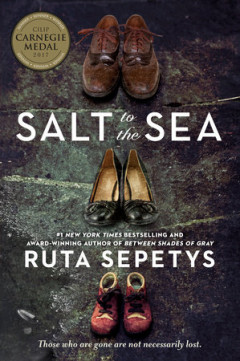
Salt to the sea
Winter 1945. WWII. Four refugees. Four stories. Each one born of a different homeland; each one hunted, and haunted, by tragedy, lies, war. As thousands desperately flock to the coast in the midst of a Soviet advance, four paths converge, vying for passage aboard the Wilhelm Gustloff, a ship that promises safety and freedom. But not all promises can be kept . . .
- Edition
- Ed. 1
- ISBN/ISSN
- 9780142423622
- Collation
- 418 p. ; 21 cm
- Series Title
- -
- Call Number
- 823 SEP S
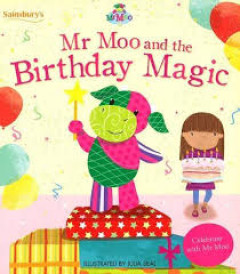
Mr. Moo and the birthday magic
It's Mum's birthday, but Mr Moo has NOTHING to give her. With the help of some magical mayhem, will he be able to find a very special present?
- Edition
- -
- ISBN/ISSN
- 9780552576185
- Collation
- 24 p. ; ill. ; 26,5 cm
- Series Title
- Mr. Moo
- Call Number
- F SEA m
It could have been worse
Mouse is on his way home, when he falls and lands with a bump. Little does Mouse realise that it could have been much worse...
- Edition
- -
- ISBN/ISSN
- 9781905606863
- Collation
- 30 p. ; ill. ; 23 cm
- Series Title
- -
- Call Number
- F BEN i
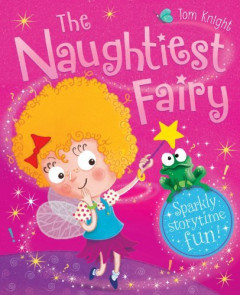
The naughtiest fairy
Trixi loves to play naughty tricks on all her friends, but they've decided that it's time she received a dose of her own medicine! Children will LOVE to read all about Trixi and her fabulous fairy friends in this super-fun picture book, perfect for a magical story-time.
- Edition
- -
- ISBN/ISSN
- 9781781976258
- Collation
- 24 p. ; ill. ; 27 cm
- Series Title
- -
- Call Number
- F KNI t
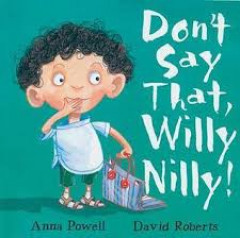
Don't say that Willy Nilly!
Willy Nilly is off to the shop to buy a cabbage. “Yuk!” he says. “Don’t say that, Willy Nilly!” says his mum. So Willy Nilly tries very hard to always say the right thing but somehow he always says it just at the wrong moment. “Don’t say that, Willy Nilly!” he’s told. Will Willy Nilly ever get it right?
- Edition
- -
- ISBN/ISSN
- 9781854309044
- Collation
- 32 p. ; ill. ; 24 cm
- Series Title
- -
- Call Number
- F POW d
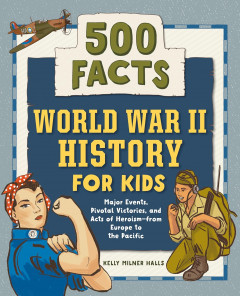
500 facts World War 2 history for kids
You don't need a long, boring textbook to learn about history! Starting with the events that set the stage for war and finishing with its aftermath
- Edition
- Ed. 1
- ISBN/ISSN
- 9781648763762
- Collation
- 170 p. ; ill. ; 23 cm
- Series Title
- -
- Call Number
- 940 HAL I
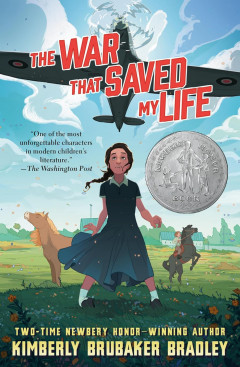
The War That Saved My Life
So begins a new adventure for Ada, and for Susan Smith, the woman who is forced to take the two kids in. As Ada teaches herself to ride a pony, learns to read, and watches for German spies, she begins to trust Susan—and Susan begins to love Ada and Jamie. But in the end, will their bond be enough to hold them together through wartime? Or will Ada and her brother fall back into the cruel hands…
- Edition
- Ed. 1
- ISBN/ISSN
- 9780147510488
- Collation
- 316 p. ; ill. ; 20 cm
- Series Title
- -
- Call Number
- 823 KIM t
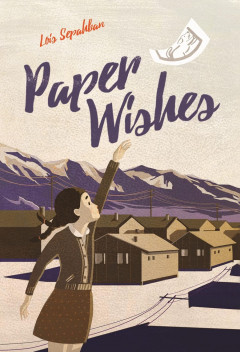
Paper wishes: after Pearl Harbor, everything changes for her family
Ten-year-old Manami did not realize how peaceful her family's life on Bainbridge Island was until the day it all changed. It's 1942, after the attack on Pearl Harbor, and Manami and her family are Japanese American, which means that the government says they must leave their home by the sea and join other Japanese Americans at a prison camp in the desert. Manami is sad to go, but even worse is t…
- Edition
- Ed. 1
- ISBN/ISSN
- 9781250104144
- Collation
- 181 p. ; 19 cm
- Series Title
- -
- Call Number
- 823 SEP P
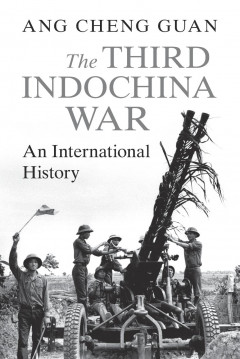
The third Indochina war: an international history
The Third Indochina War – comprised of the Vietnam-Kampuchea War from 1978 to 1990 and the brief Sino-Vietnamese War in February 1979 – has received far less scholarly attention than the earlier two Indochina Wars. Ang Cheng Guan utilises a wide range of archival and secondary material, including Vietnamese, Cambodian, Chinese, Soviet, American, British, Australian and ASEAN sources, to pro…
- Edition
- Ed. 1
- ISBN/ISSN
- 9781009560054
- Collation
- 215 p. ; 22 cm
- Series Title
- -
- Call Number
- 959 GUA T
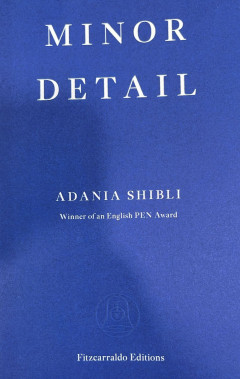
Minor detail
Minor Detail begins during the summer of 1949, one year after the war that the Palestinians mourn as the Nakba―the catastrophe that led to the displacement and exile of some 700,000 people―and the Israelis celebrate as the War of Independence. Israeli soldiers murder an encampment of Bedouin in the Negev desert, and among their victims they capture a Palestinian teenager and they rape her, …
- Edition
- Ed. 1
- ISBN/ISSN
- 9781913097172
- Collation
- 112 p. ; 19,5 cm
- Series Title
- -
- Call Number
- 823 SHI M
 Computer Science, Information & General Works
  Philosophy & Psychology
  Religion
  Social Sciences
  Language
  Pure Science
  Applied Sciences
  Art & Recreation
  Literature
  History & Geography