Filter by
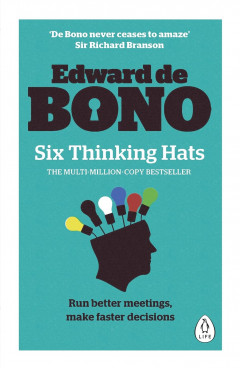
Six thinking hats: run better meetings, make faster decisions
In Six Thinking Hats, Edward de Bono shows how meetings can be transformed to produce quick, decisive results every time. The Six Hats method is a devastatingly simple technique based on the brain's different modes of thinking. The intelligence, experience and information of everyone is harnessed to reach the right conclusions quickly. These principles fundamentally change the way you work and …
- Edition
- Ed. 1
- ISBN/ISSN
- 9780241257531
- Collation
- 177 p. ; 20 cm
- Series Title
- -
- Call Number
- 153 BON s
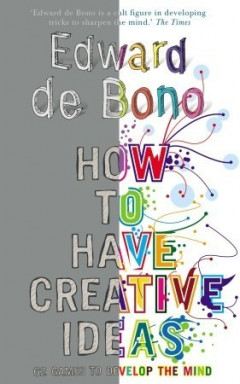
How to Have Creative Ideas : 62 Exercises to Develop the Mind
Everybody wants to be creative. Creativity makes life more fun, more interesting and more full of achievement, but too many people believe that creativity is something you are born with and cannot be learned. In How to Have Creative Ideas Edward de Bono - the leading authority on creative thinking - outlines 62 different games and exercises, built around random words chosen from a list, to h…
- Edition
- -
- ISBN/ISSN
- 9780091910488
- Collation
- 13,5 x 21,5; Pbk; Bw; 192p
- Series Title
- -
- Call Number
- 153.35 BON h
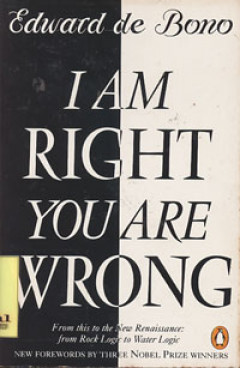
I Am Right You Are Wrong : From this to the New Renaissance : from Rock Logi…
de Bono believes that rock logic thinking cannot provide the constructive energies that we are going to need in order to solve problems. Instead of rock logic he proposes the water logic of perception. Drawing on our understanding of the brain as a self-
- Edition
- -
- ISBN/ISSN
- 140126783
- Collation
- xx; 293p; bw; ill; pbk.
- Series Title
- -
- Call Number
- 158 BON I

Pintar Memilah Informasi: 6 cara berpikir praktis
Buku ini akan membantu anda dalam brainstorming, riset, berbagai kegiatan pengumpulan data, dan segala hal yang anda lakukan yang bersinggungan dengan informasi. Latihlah pikiran anda mulai hari ini dan jadilah lebih efisien dan fokus saat ini juga!
- Edition
- -
- ISBN/ISSN
- 978-979-19784-2-2
- Collation
- 102p; pbk
- Series Title
- -
- Call Number
- 158 BON
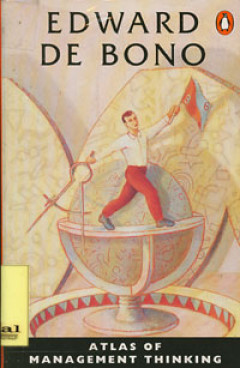
Atlas of Management Thinking
Edward de Bono expects his ideas to outrage conventional thinkers, yet time has been on his side, and the ideas that he first put forward twenty years ago in his book.'
- Edition
- -
- ISBN/ISSN
- 140137769
- Collation
- 200p; bw; ill; pbk.
- Series Title
- -
- Call Number
- 158 BON
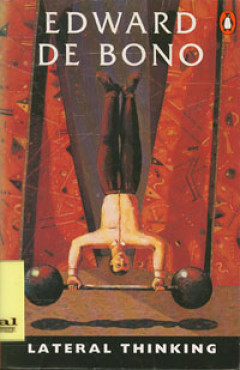
Lateral Thingking
Edward de Bono expects his ideas to outrage conventional thinkers, yet time has been on his side, and the ideas that he first put forward twenty years ago in his book.'
- Edition
- -
- ISBN/ISSN
- 0-14-013779-3
- Collation
- 260p; bw; ill; pbk
- Series Title
- -
- Call Number
- 158 BON
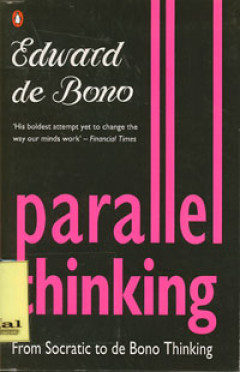
Parallel Thinking : From Socratic to de Bono Thinking
The old boxes are no longer adequate to cope with today's rapidly changing world. Wee need to switch from judgement to design. Accept possibilities without judging and lay them down in parallel, Accept both sides of a contradiction and lay them down in p
- Edition
- -
- ISBN/ISSN
- 140230769
- Collation
- 228p; bw; ill; pbk
- Series Title
- -
- Call Number
- 158 BON

PO: Beyond Yes and No
Edward de Bono expects his ideas to outrage conventional thinkers, yet time has been on his side, and the ideas that he first put forward twenty years ago in his book.'
- Edition
- -
- ISBN/ISSN
- 140137823
- Collation
- 175p; bw; ill; pbk.
- Series Title
- -
- Call Number
- 158 BON
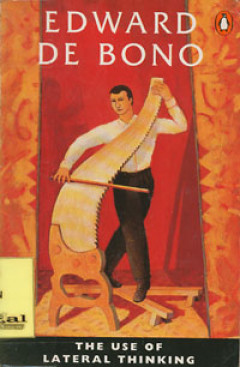
The Use of Lateral Thinking
There emerges the concept of an imaginative, free wheeling, opportunist (but low-probability) mode of thought in which fresh ideas, which may well be simple, sound and effective, are often thrown up. Lateral thinking is thus contrasted with the orthodox,
- Edition
- -
- ISBN/ISSN
- 140137882
- Collation
- 293p; bw; ill; pbk.
- Series Title
- -
- Call Number
- 158 BON
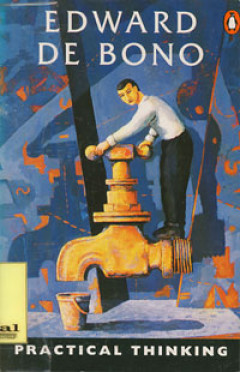
Practical Thinking
Edward de Bono expects his ideas to outrage conventional thinkers, yet time has been on his side, and the ideas that he first put forward twenty years ago in his book.'
- Edition
- -
- ISBN/ISSN
- 140137831
- Collation
- 188p; bw; ill; pbk
- Series Title
- -
- Call Number
- 158 BON
 Computer Science, Information & General Works
  Philosophy & Psychology
  Religion
  Social Sciences
  Language
  Pure Science
  Applied Sciences
  Art & Recreation
  Literature
  History & Geography