Filter by
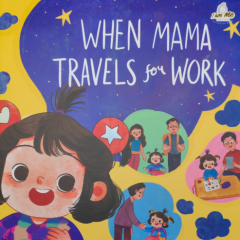
When mama travels for work
- Edition
- -
- ISBN/ISSN
- 9789819449682
- Collation
- 24 p. ; ill. ; 22 cm
- Series Title
- I am me Series
- Call Number
- 155 SOE w
- Edition
- -
- ISBN/ISSN
- 9789819449682
- Collation
- 24 p. ; ill. ; 22 cm
- Series Title
- I am me Series
- Call Number
- 155 SOE w

The righteous mind : mengapa orang-orang baik terpecah karena politik dan agama
The Righteous Mind menjelaskan tentang Moral Foundation Theory (MFT) yang dibuat oleh Jonathan Haidt, digunakan untuk memahami fenomena keterbelahan politik. Haidt menjelaskan bahwa landasan penilaian moral bersifat intuisi bukan pikiran rasional manusia, maksudnya evaluasi moral mirip dengan penilaian estetis. Teori ini juga menjelaskan penalaran moral ternyata dipicu oleh tuntutan sosial untu…
- Edition
- -
- ISBN/ISSN
- -
- Collation
- 463p. ; 23 cm
- Series Title
- -
- Call Number
- 300 HAI r
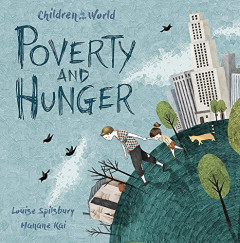
Poverty and hunger
With our 24/7 news cycle and constant access to the latest headlines, the world can be a scary place. Now imagine you're a child trying to make sense of it all! What does this news mean? How does it affect me? That's where Children in Our World can help. This beautifully illustrated non-fiction series takes a timely look at today's biggest issues and sensitively explains the crises that dominat…
- Edition
- -
- ISBN/ISSN
- 9781526300546
- Collation
- 32p; ill; col; pbk; ind.; 25m
- Series Title
- Children in our world
- Call Number
- 362.5 SPI p

Should We Trust the News?
"Fake news" is a term used by politicians and on social media. It can be difficult to know what news sources to trust, or if any can be trusted. The question of whether or not we should trust the news is at the center of this critical thinking exercise, which is also an accessible introduction to media literacy.
- Edition
- -
- ISBN/ISSN
- 9781534529953
- Collation
- 24 p. ; ill.
- Series Title
- Point of View
- Call Number
- 360 KAW s

Is It Wrong to Ban Books?
When people discuss the idea of banning books, they are also discussing much broader concepts, including censorship, basic freedoms, and the power of religious and political institutions. These challenging topics are presented in accessible ways as readers explore the debate surrounding banned books.
- Edition
- -
- ISBN/ISSN
- 9781534524897
- Collation
- 24 p. ; ill.
- Series Title
- Point of View
- Call Number
- 360 AUS i
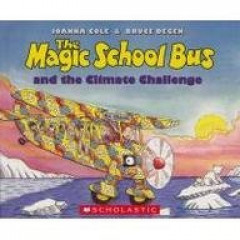
The magic school bus and the climate challenge
Trust the bestselling science series of all time to get down to the facts on global warming, so kids can understand the crisis—and how they can help solve it. Like it or not, global warming is a hot topic, and it will affect the younger generation the most. So why not turn to the teacher kids like the most, Ms. Frizzle! Only the Friz can boil all the hoopla down to the scientific facts in …
- Edition
- -
- ISBN/ISSN
- 9780545453776
- Collation
- Unpaged. ; ill. ; 20 cm
- Series Title
- -
- Call Number
- 363 COL t
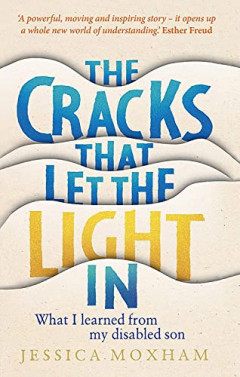
The cracks the let the light in
Jessica Moxham thought she was prepared for the experience of motherhood. Armed with advice from friends and family, parenting books and antenatal classes, she felt ready. After giving birth, she found herself facing a different, more uncertain reality. Her son, Ben, was fighting to stay alive. When Jessica could finally take him home from hospital, the challenges were far from over. In t…
- Edition
- -
- ISBN/ISSN
- 9781913068349
- Collation
- 264 p. ; 22 cm
- Series Title
- -
- Call Number
- 305 MOX t
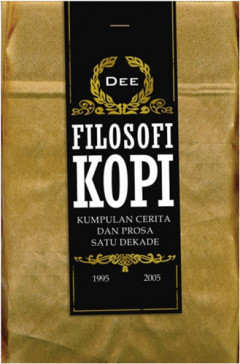
Filosofi Kopi : Kumpulan Cerita Dan Prosa Satu Dekade
kumpulan cerita & prosa nya Dewi Lestari sejak tahun 1995 sampai 2005.menggambarkan suasana yang terasa lembut (seperti capucino) dengan tuturan kata-kata yang ia tulis. Dengan demikian setiap petuah-petuah yang terselip di dalam cerita pendek itu lebih mudah tercerna oleh pembaca karena tidak mengandung arogansi.
- Edition
- 1
- ISBN/ISSN
- 9786028811613
- Collation
- 142p; bw; pbk
- Series Title
- -
- Call Number
- 813 LES F

Turning the tide on plastic: how humanity (and you) can make our globe clean …
- Edition
- Ed. 1
- ISBN/ISSN
- 9781409182993
- Collation
- 264 p. ; 19,5 cm
- Series Title
- -
- Call Number
- 363 SIE t
- Edition
- Ed. 1
- ISBN/ISSN
- 9781409182993
- Collation
- 264 p. ; 19,5 cm
- Series Title
- -
- Call Number
- 363 SIE t

Does Voting Matter?
Society can be cynical at times, and this can lead to apathy. One example of this is the question of whether or not a person's individual vote in an election actually matters. Readers are exposed to the different points of view about this hot-button topic, and they learn to develop their own viewpoint about the democratic process and to back it up with relevant facts.
- Edition
- -
- ISBN/ISSN
- 9781534524910
- Collation
- 24 p. ; ill.
- Series Title
- Point of View
- Call Number
- 360 BEC d
 Computer Science, Information & General Works
  Philosophy & Psychology
  Religion
  Social Sciences
  Language
  Pure Science
  Applied Sciences
  Art & Recreation
  Literature
  History & Geography