Filter by
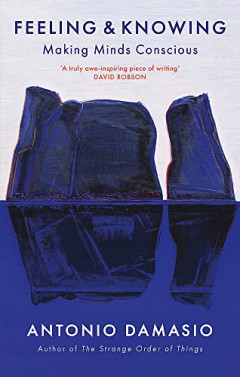
Feeling & knowing: making mind conscious
In recent decades, many philosophers and cognitive scientists have declared the problem of consciousness unsolvable, but Antonio Damasio is convinced that recent findings across multiple scientific disciplines have given us a way to understand consciousness and its significance for human life.
- Edition
- Ed. 1
- ISBN/ISSN
- 9781472147349
- Collation
- 233 p. ; 20 cm
- Series Title
- -
- Call Number
- 128 DAM f
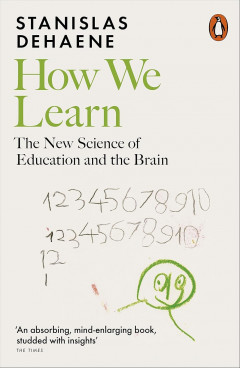
How we learn: the new science of education and the brain
Humanity's greatest feat is our incredible ability to learn. Even in their first year, infants acquire language, visual and social knowledge at a rate that surpasses the best supercomputers. But how, exactly, do our brains learn? In How We Learn, leading neuroscientist Stanislas Dehaene delves into the psychological, neuronal, synaptic and molecular mechanisms of learning. Drawing on case st…
- Edition
- -
- ISBN/ISSN
- 9780141989303
- Collation
- 319 p. ; ill. ; 20 cm
- Series Title
- -
- Call Number
- 153 DEH h
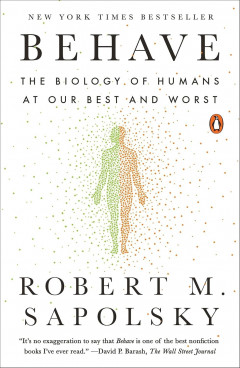
Behave: the biology of humans at our best and worst
Behave is one of the most dazzling tours d’horizon of the science of human behavior ever attempted. Moving across a range of disciplines, Sapolsky—a neuroscientist and primatologist—uncovers the hidden story of our actions. Undertaking some of our thorniest questions relating to tribalism and xenophobia, hierarchy and competition, and war and peace, Behave is a towering achievement—a ma…
- Edition
- -
- ISBN/ISSN
- 9780143110910
- Collation
- 789 p. ; ill. ; 22 cm
- Series Title
- -
- Call Number
- 612 SAP b

Uncommon sense teaching: practical insight in brain science to help students …
Neuroscientists and cognitive scientists have made enormous strides in understanding the brain and how we learn, but little of that insight has filtered down to the way teachers teach. Uncommon Sense Teaching applies this research to the classroom for teachers, parents, and anyone interested in improving education. Topics include: • keeping students motivated and engaged, especially wit…
- Edition
- Ed. 1
- ISBN/ISSN
- 9780593329733
- Collation
- 322 p. ; 21 cm
- Series Title
- -
- Call Number
- 370 OAK u

How the Mind Changed: A Human History of Our Evolving Brain
The extraordinary story of how the human brain evolved… and is still evolving. We’ve come a long way. The earliest human had a brain as small as a child’s fist; ours are four times bigger, with spectacular abilities and potential we are only just beginning to understand. This is How the Mind Changed, a seven-million-year journey through our own heads, packed with vivid stories, g…
- Edition
- -
- ISBN/ISSN
- 9780316424981
- Collation
- 310 pages, ill, black and white, hard cover
- Series Title
- -
- Call Number
- 570
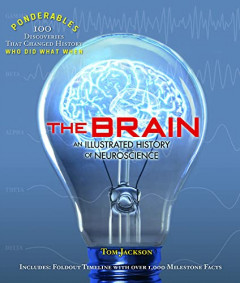
The Brain An Illustrated History Of Neuroscience
Here is the essential guide to the human brain, an authoritative reference book and timeline that examines the three pounds of matter inside our heads that does all our thinking for us. With 100 billion nerve cells joined by thousands more to every corner of the body, the brain is wired together with 100 trillion connections. That makes each and every human brain a contender for the most comple…
- Edition
- -
- ISBN/ISSN
- 9780985323080
- Collation
- 144 pages; illus. ..28cm
- Series Title
- -
- Call Number
- 612.8 JAC t
 Computer Science, Information & General Works
  Philosophy & Psychology
  Religion
  Social Sciences
  Language
  Pure Science
  Applied Sciences
  Art & Recreation
  Literature
  History & Geography