Filter by

Sejarah Musik Jilid 4
- Edition
- -
- ISBN/ISSN
- 9798133102
- Collation
- -
- Series Title
- -
- Call Number
- -780.9 MAC S
- Edition
- -
- ISBN/ISSN
- 9798133102
- Collation
- -
- Series Title
- -
- Call Number
- -780.9 MAC S
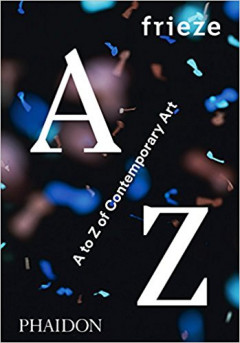
Frieze A to Z of Contemporary Art
rieze A to Z of Contemporary Art charts the dynamic, changing landscape of the contemporary art and culture of the past quarter century. Drawing on frieze magazine’s exceptional back catalogue of articles, this book brings together a curated collection of over fifty engaging highlights. It features artist interviews; essays on subjects as varied as museums, photography, pre-historic art and t…
- Edition
- -
- ISBN/ISSN
- 9780714871998
- Collation
- -
- Series Title
- -
- Call Number
- -709.04 PHA F

This is Goya
Modern art begins with Goya. He was the first to create works of art for their own sake, and he lived in a time of incredible cultural and social dynamism when the old concepts of social hierarchy were being shaken by the new concept of equality for all. He saw his world ripped apart by Napoleon's armies and then suffered the reactionary backlash as the old order was restored. Against this epic…
- Edition
- -
- ISBN/ISSN
- 9781780676166
- Collation
- -
- Series Title
- -
- Call Number
- -759.6 BIR T
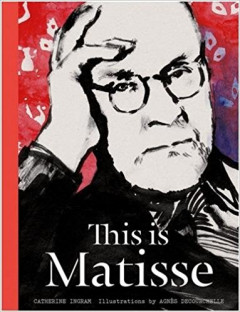
This is Matisse
In the history of twentieth century modernism, Henri Matisse is a calm and unstoppable revolution of creative genius. Trained originally in the French classical manner, he was inspired by the Impressionists and Cézanne to create in a style that brought out the beauty of colour, form and line by reducing them to their essentials. While considered a leader of the Fauves and an inspiration to …
- Edition
- -
- ISBN/ISSN
- 9781780674797
- Collation
- -
- Series Title
- -
- Call Number
- -759.4 ING T
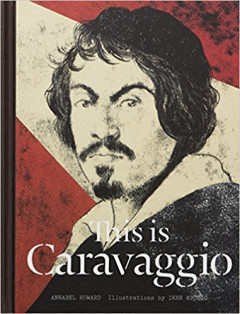
This is Caravaggio
Mercurial, saturnine, scandalous, and unpredictable, Caravaggio—as a man, as a character, and as an artist—holds dramatic appeal. He spent a large part of his life on the run, leaving a trail of illuminated chaos wherever he passed, most of it recorded in criminal justice records. When he did settle for long enough to paint, he produced works of staggering creativity and technical innov…
- Edition
- -
- ISBN/ISSN
- 9781780677002
- Collation
- -
- Series Title
- -
- Call Number
- -759.5 HOW T
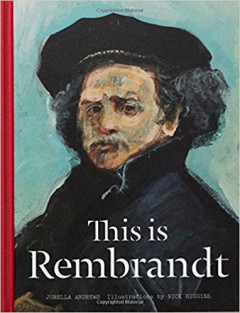
This is Rembrandt
Rembrandt van Rijn is the quintessential Old Master. His intimately observed, vivid and profoundly atmospheric works are what many museum-goers consider traditional painting ought to be. But in his own lifetime Rembrandt was not always so well regarded. The expressive honesty of his paintings and prints could evoke disdain as easily as admiration. For more than a century after his death his sty…
- Edition
- -
- ISBN/ISSN
- 9781780677453
- Collation
- -
- Series Title
- -
- Call Number
- -759.9492 AND T
Mathematics For The International Student : Mathematics HL (Core) Haese and H…
- Edition
- -
- ISBN/ISSN
- 9781921972119
- Collation
- -
- Series Title
- -
- Call Number
- -
- Edition
- -
- ISBN/ISSN
- 9781921972119
- Collation
- -
- Series Title
- -
- Call Number
- -
Mathematics for the International Student 10E MYP 5 (Extended)
- Edition
- -
- ISBN/ISSN
- 97819219725539
- Collation
- -
- Series Title
- -
- Call Number
- -
- Edition
- -
- ISBN/ISSN
- 97819219725539
- Collation
- -
- Series Title
- -
- Call Number
- -
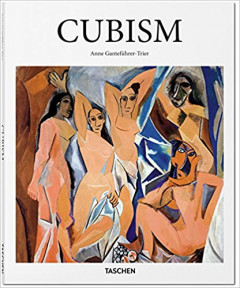
Cubism
Pioneered by Picasso and Braque, Cubism has been described as the first avant-garde art movement of the 20th century. With inspiration from African and Native American art and sculpture, its practitioners deconstructed European conventions of viewpoint, form, perspective to create flattened, fragmented, and revolutionary images. Picasso’s celebrated painting Les Demoiselles d’Avignon is …
- Edition
- -
- ISBN/ISSN
- 9783836505390
- Collation
- -
- Series Title
- -
- Call Number
- 709.04 TRI C
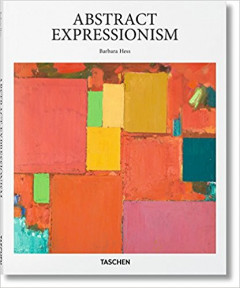
Abstract Expressionism
Hailed as the first American-born art movement to have a worldwide influence, Abstract Expressionism denotes the non-representational use of paint as a means of personal expression. It emerged in America in the 1940s, with lead protagonists including Jackson Pollock, Philip Guston, Robert Motherwell, Mark Rothko, and Willem de Kooning. Abstract Expressionism spawned many different stylistic…
- Edition
- -
- ISBN/ISSN
- 9783836505178
- Collation
- -
- Series Title
- -
- Call Number
- -709.04052 HES A
 Computer Science, Information & General Works
  Philosophy & Psychology
  Religion
  Social Sciences
  Language
  Pure Science
  Applied Sciences
  Art & Recreation
  Literature
  History & Geography