Filter by

Globalization
- Edition
- -
- ISBN/ISSN
- 9780736297530
- Collation
- 32 p, ; ill. ; 25 cm
- Series Title
- -
- Call Number
- 303 MIL g
- Edition
- -
- ISBN/ISSN
- 9780736297530
- Collation
- 32 p, ; ill. ; 25 cm
- Series Title
- -
- Call Number
- 303 MIL g

Globalization
- Edition
- -
- ISBN/ISSN
- 9780736297547
- Collation
- 32 p, ; ill. ; 25 cm
- Series Title
- -
- Call Number
- 303 MIL g
- Edition
- -
- ISBN/ISSN
- 9780736297547
- Collation
- 32 p, ; ill. ; 25 cm
- Series Title
- -
- Call Number
- 303 MIL g

Habitat Preservation
- Edition
- -
- ISBN/ISSN
- 9780736297783
- Collation
- 32p.:ill.;pbk
- Series Title
- -
- Call Number
- 591 MIT h
- Edition
- -
- ISBN/ISSN
- 9780736297783
- Collation
- 32p.:ill.;pbk
- Series Title
- -
- Call Number
- 591 MIT h

Day time and night time
- Edition
- -
- ISBN/ISSN
- 9780711283510
- Collation
- 64 p, ; ill. ; 22 cm
- Series Title
- -
- Call Number
- 591 BRI d
- Edition
- -
- ISBN/ISSN
- 9780711283510
- Collation
- 64 p, ; ill. ; 22 cm
- Series Title
- -
- Call Number
- 591 BRI d
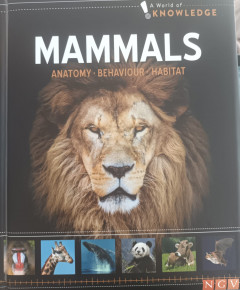
Mammals: Anatomy, Behavior, Habitat
How does a sloth differ from a koala? What do the wild relations of our pet cats and dogs look like? What are the major mammal groups? Do you want to know the answers to these and many more questions about animals and their biology? Just delve into this book and discover a wealth of fascinating information about the animal kingdom. Learn about monkeys' habitats and find out how moles build the…
- Edition
- -
- ISBN/ISSN
- 4050847038687
- Collation
- 96 p, ; ill. ; 29 cm
- Series Title
- -
- Call Number
- 599 CON m

Warna
Berisi pengenalan warna untuk baby & toddler disertai foto-foto asli benda nya yang menarik & colorful. Tiap halaman berisi 1 foto saja untuk memudahkan baby/toddler fokus terhadap gambarnya.
- Edition
- -
- ISBN/ISSN
- 9781787728585
- Collation
- unpaged. ; ill. ; 16 cm
- Series Title
- Baby's first
- Call Number
- F GIN w
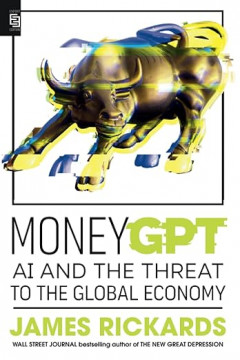
Money GPT: AI and the threat to the global economy
A telling prediction for how AI will endanger global economic markets and security
- Edition
- Ed. 1
- ISBN/ISSN
- 9798217043767
- Collation
- 214 p. ; 21 cm
- Series Title
- -
- Call Number
- 658 RIC M

2030: how today's biggest trends will collide and reshape the future of every…
Once upon a time, the world was neatly divided into prosperous and backward economies. Babies were plentiful, workers outnumbered retirees, and people aspiring towards the middle class yearned to own homes and cars. Companies didn't need to see any further than Europe and the United States to do well. Printed money was legal tender for all debts, public and private. We grew up learning how to "…
- Edition
- Ed. 1
- ISBN/ISSN
- 9781250268198
- Collation
- 278 p. ; 21 cm
- Series Title
- -
- Call Number
- 330 GUI t

No contest: the case against competition: why we lose in our race to win
No Contest stands as the definitive critique of competition. Contrary to accepted wisdom, competition is not basic to human nature; it poisons our relationships and holds us back from doing our best. In this new edition, Alfie Kohn argues that the race to win turns all of us into losers.
- Edition
- -
- ISBN/ISSN
- 9780395631256
- Collation
- 336 p. ; 21 cm
- Series Title
- -
- Call Number
- 302 KOH n
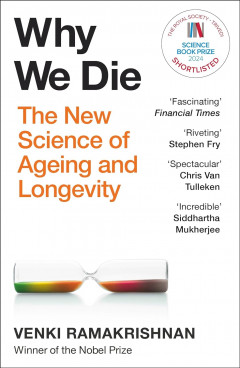
Why we die: the new science of ageing and longevity
The knowledge of death is so terrifying that we live most of our lives in denial of it. Throughout human history—from the immortal afterlife of Judeo-Christian thought to the cycle of reincarnation posited by many Eastern religions—we have developed beliefs that allow us to avoid recognizing its finality. One of the most difficult moments of childhood must be when each of us first realizes …
- Edition
- Ed. 1
- ISBN/ISSN
- 9781529369281
- Collation
- 310 p. ; 20 cm
- Series Title
- -
- Call Number
- 304 RAM w
 Computer Science, Information & General Works
  Philosophy & Psychology
  Religion
  Social Sciences
  Language
  Pure Science
  Applied Sciences
  Art & Recreation
  Literature
  History & Geography