Filter by
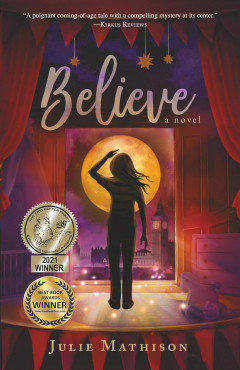
Believe
Melanie knows she's special. She understands the secret language of old houses and can make jewels out of broken glass. Her imagination can do anything - except make friends. But then, she meets Sabrina, who looks like a TV star and acts like a spy, and who doesn't care what anyone thinks. She teaches Melanie how to believe in herself, and soon Melanie starts living her dreams. She even lands t…
- Edition
- -
- ISBN/ISSN
- 9781735003702
- Collation
- 222 p. ; ill. ; 22 cm
- Series Title
- -
- Call Number
- 823 MAT b
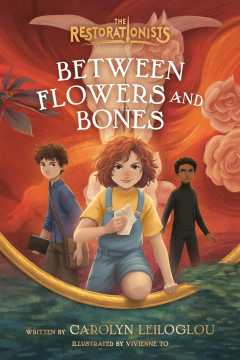
Between flowers and bones (the restorationists)
Twelve-year-old Georgia assumed she would one day be the last Restorationist protecting art from evil forces. So she was thrilled when her cousin Vincent finally joined the family calling. But Vincent’s flashier Gift makes Georgia feel like a sidekick rather than a hero. And things only get more complicated and perilous after he willingly steps into the heart of danger. Will the remnant…
- Edition
- -
- ISBN/ISSN
- 9780593579572
- Collation
- 267 p. ; ill. ; 21 cm
- Series Title
- -
- Call Number
- 823 LEI b
Lima Sekawan : Minggat
Siapa yang telah datang ke Pulau Kirrin? Apa isi koper hitam misterius yang disembunyikan di Pulau Kirrin? Lima Sekawan mengira mereka sedang memburu penyeludup sampai mereka mendengar jeritan anak kecil...
- Edition
- -
- ISBN/ISSN
- 9786020321301
- Collation
- 272 p.; bw.; pbk.; 18cm
- Series Title
- Lima Sekawan
- Call Number
- F BLY l
Cupcake Diaries : Smile and Say "Cupcake!"
- Edition
- -
- ISBN/ISSN
- 9781442453982
- Collation
- 160 p. ; 19,5 cm
- Series Title
- -
- Call Number
- F SIM e
- Edition
- -
- ISBN/ISSN
- 9781442453982
- Collation
- 160 p. ; 19,5 cm
- Series Title
- -
- Call Number
- F SIM e
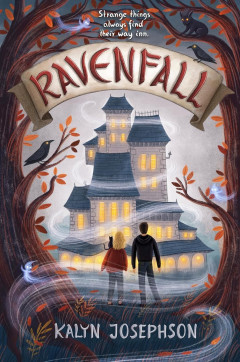
Ravenfall
Thirteen-year-old Anna Ballinkay has never been normal. Her family uses their psychic abilities to help run the Ravenfall Inn, a magical B&B between the human world and the Otherworld. But it’s hard to contribute when your only power is foreseeing death. So when fourteen-year-old Colin Pierce arrives at Ravenfall searching for his missing older brother, Anna jumps at the chance to help. Bu…
- Edition
- -
- ISBN/ISSN
- 9780593483619
- Collation
- 246 p. ; ill. ; 19 cm
- Series Title
- -
- Call Number
- 823 JOS r
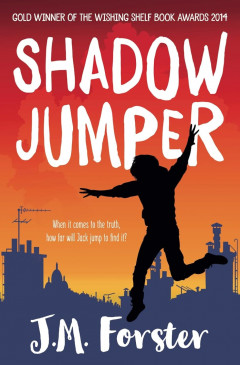
Shadow jumper
The truth is out there somewhere . . . but how far is Jack willing to jump to find it? Jack Phillips's allergy to sunshine confines him to the shadows, leaving him lonely and at risk of life-threatening burns every time he steps into the light. Shadow jumping on the rooftops at dusk makes him feel alive. And free. But Jack's condition is suddenly worse than ever and only his missing scientist d…
- Edition
- -
- ISBN/ISSN
- 9780993070907
- Collation
- 204 p. ; ill. ; 20 cm
- Series Title
- -
- Call Number
- 823 FOR s
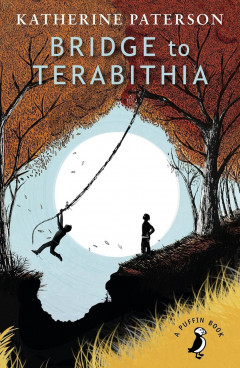
Bridge to Terabithia
Jess Aarons' greatest ambition is to be the fastest runner in his grade. He's been practicing all summer and can't wait to see his classmates' faces when he beats them all. But on the first day of school, a new girl boldly crosses over to the boys' side and outruns everyone.That's not a very promising beginning for a friendship, but Jess and Leslie Burke become inseparable. Together they create…
- Edition
- -
- ISBN/ISSN
- 9780141359786
- Collation
- 178 p. ; ill. ; 20 cm
- Series Title
- -
- Call Number
- 823 PAT b
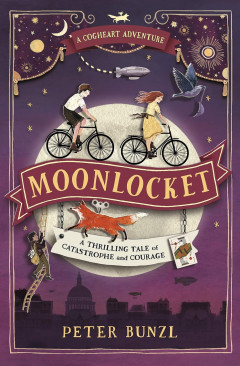
Moonlocket (The cogheart adventures)
It’s hard to escape the secrets from the past. Storm clouds gather over Lily and Robert’s summer when criminal mastermind the Jack of Diamonds appears. Jack is searching for the mysterious Moonlocket—but that’s not the only thing he’s after. Suddenly, dark secrets from Robert’s past plunge him into danger. Jack is playing a cruel game that Robert is wrapped up in. Lily and Mal…
- Edition
- -
- ISBN/ISSN
- 9781474915014
- Collation
- 379 p. ; ill. ; 20 cm
- Series Title
- The cogheart adventures
- Call Number
- 823 BUN m
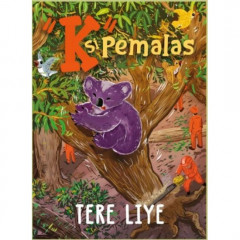
"K" si pemalas
Apakah kalian tahu koala? Ssst, koala adalah hewan yang sangat suka tidur. Seekor koala bisa tidur selama 16-20 jam. Tapi K, seekor koala remaja, dia bisa tidur 22 jam sehari. Aduh, berarti dia hanya bangun selama dua jam saja. Suatu hari, karena terlalu asyik tidur, K terjebak dalam masalah serius. Dia terpisah dari Mama dan Papanya. Dan hutan tempatnya tinggal terancam. Maka mulailah petu…
- Edition
- -
- ISBN/ISSN
- 9786238882243
- Collation
- 72 p. ; ill. ; 30 cm
- Series Title
- -
- Call Number
- F LIY k

Saat Pertamaku... Tour Sekolah
- Edition
- -
- ISBN/ISSN
- 9789790842199
- Collation
- 24 p. ; ill. ; 21 cm
- Series Title
- -
- Call Number
- F MAR s
- Edition
- -
- ISBN/ISSN
- 9789790842199
- Collation
- 24 p. ; ill. ; 21 cm
- Series Title
- -
- Call Number
- F MAR s
 Computer Science, Information & General Works
  Philosophy & Psychology
  Religion
  Social Sciences
  Language
  Pure Science
  Applied Sciences
  Art & Recreation
  Literature
  History & Geography