Audio Visual
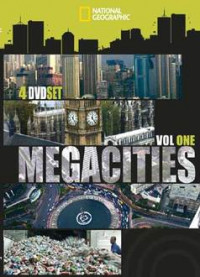
National Geographic : Megacities Vol. 01 (f-board Deluxe Edition 4 Dvd Set)
ONG KONG
The crossroads of the world, the most densely populated urban area on the planet. It’s the city where East meets West, ancient meets modern, and communism meets capitalism. When people, places and things of such stark contrasts come together in one Megacity, they have one thing in common: money, the common denominator.
LONDON
George Orwell once warned of a future where “Big Brother is watching.” Today in London, he is. But his is not an evil eye. Instead, it’s an eye toward averting disaster. Not one but three great rivers flow through London - by air, water, and land. They are the keys to keeping this MegaCity alive and running: (1) London has the world’s busiest international airspace; (2) The Thames is the world’s busiest urban river; and (3) The streets of London are so jammed, you have to pay to drive on them. One major accident anywhere can cripple this MegaCity, where keeping people and goods moving is the key to its survival. To head off disaster, London deploys high-tech eyes everywhere, constantly scanning the skies, the river, and the ground. This is a view of London like nothing ever seen before: going behind the scenes to watch the watchers and their incredible technologies, in all three dimensions.
JAKARTA
As Indonesia’s economic, cultural and political center, Jakarta has been the gateway to Asia for 2,000 years. In the early 1500s, the Dutch created the port city of Batavia, now North Jakarta, to transport spices to Europe. Ever since, the city has blended Asian and European influences into a fusion of traditional and modern culture. The greater metro area now contains over 23 million people, stressing the infrastructure and increasing pollution and flooding from clogged sewer pipes and waterways. But Jakarta is taking these issues on one-by-one while continuing to grow as one of Southeast Asia’s shining cities.
SAO PAOLO
Fourteen thousand tons of garbage every day. How does a MegaCity deal with this volume of waste? São Paulo has faced the challenge by creating an impressive large-scale recycling project and infrastructure, and some groundbreaking uses for massive piles of trash. From collecting the methane gas and transforming it into electricity, to recycling aluminum cans and steel, Sao Paulo shows that it has found treasure in its trash.
Availability
Detail Information
- Series Title
-
-
- Call Number
-
-
- Publisher
- : National Geographic., 2010
- Collation
-
-
- Language
-
English
- ISBN/ISSN
-
8994181173832
- Classification
-
-
- Content Type
-
-
- Media Type
-
-
- Carrier Type
-
-
- Edition
-
-
- Subject(s)
-
-
- Specific Detail Info
-
-
- Statement of Responsibility
-
-
Other version/related
No other version available
File Attachment
Comments
You must be logged in to post a comment
 Computer Science, Information & General Works
  Philosophy & Psychology
  Religion
  Social Sciences
  Language
  Pure Science
  Applied Sciences
  Art & Recreation
  Literature
  History & Geography