Filter by
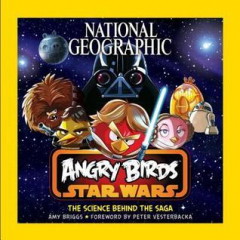
Angry Birds Star Wars: Science Behind the Saga
A long time ago, in a galaxy far, far away... three worlds collided. Angry Birds, Star Wars, and National Geographic united to take their fans on a galactic mission to uncover the true stories, inventions, and unbelievable science behind the science fiction. Discover how art imitates life by exploring the discovery of Kepler 16b, a real Tatooine planet; understand how a hovercraft works and how…
- Edition
- -
- ISBN/ISSN
- 9781426213021
- Collation
- -
- Series Title
- -
- Call Number
- 520 BRI a
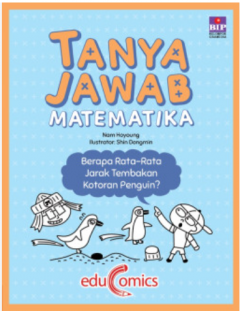
Berapa rata-rata jarak tembakan kotoran penguin
“Berapa persen orang yang sering berkata kasar saat berkendara?” “Kapan manusia musnah?” “Apa yang dimaksud dengan diagram korelasi?” “Apakah benar laki-laki lebih banyak memiliki kotoran di pusar daripada perempuan?” Pertanyaan di atas mungkin terdengar sulit untuk dijawab. Namun, buku ini mengubah pandangan tentang Matematika, dari sulit menjadi menarik dan menyenangkan. Berka…
- Edition
- -
- ISBN/ISSN
- 9786230418204
- Collation
- 93 p. ; ill. ; 22 cm
- Series Title
- Tanya jawab matematika
- Call Number
- 510 HOY b
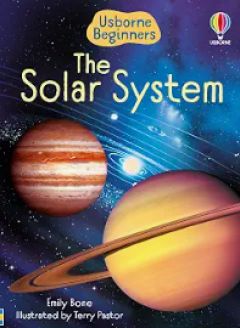
the Solar System
The Solar System introduces young readers to the fascinating world of planets and space. The book explores what the solar system is, how the planets move, and what makes each planet unique, from Mercury and Venus to Earth, Mars, Jupiter, Saturn, Uranus, and Neptune. Children also learn about the Sun, the Moon, and how scientists explore space. Colourful illustrations and photographs, together w…
- Edition
- -
- ISBN/ISSN
- 9781409514244
- Collation
- 32 p. ; col. ill. ; 21 cm
- Series Title
- Usborne Beginners
- Call Number
- 523.2 BON s

Planet Earth
- Edition
- -
- ISBN/ISSN
- 9780746080368
- Collation
- 32p; ill; col; hc
- Series Title
- -
- Call Number
- 550 PRA p
- Edition
- -
- ISBN/ISSN
- 9780746080368
- Collation
- 32p; ill; col; hc
- Series Title
- -
- Call Number
- 550 PRA p

Sun, Moon, and Stars
- Edition
- -
- ISBN/ISSN
- 9780746074770
- Collation
- 32p; ill; col; hc
- Series Title
- -
- Call Number
- 520 TUR s
- Edition
- -
- ISBN/ISSN
- 9780746074770
- Collation
- 32p; ill; col; hc
- Series Title
- -
- Call Number
- 520 TUR s
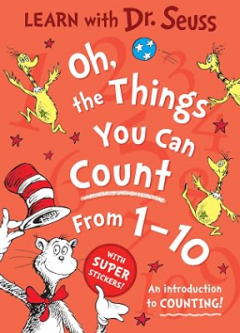
Oh the thing you can count
Oh, the Things You Can Count from 1–10 introduces young children to counting through fun activities featuring characters and illustrations inspired by Dr. Seuss. Children practise counting objects from one to ten, recognising and writing numbers, and understanding groups or sets. With playful rhymes, colourful illustrations, and interactive activities, the book helps children build early nume…
- Edition
- -
- ISBN/ISSN
- 9780008592219
- Collation
- 32 p. ; col. ill. ; 28 cm
- Series Title
- Learn With Dr. Seuss
- Call Number
- 513.211 SEU o

How many mice make an elephant? and other big questions about size and distance
How Many Mice Make an Elephant? And Other Big Questions about Size and Distance introduces children to this tricky math concept in a fun, relatable way. Fantastically written by Tracey Turner, questions such as "How many high jumps to the moon?" and "How many ice cubes make an iceberg?" get children to think about just how high, how big, and how far things are, as well as teaching them the m…
- Edition
- -
- ISBN/ISSN
- 9780753475652
- Collation
- 48 p. ; ill. ; 27,5 cm
- Series Title
- -
- Call Number
- 510 TUR h
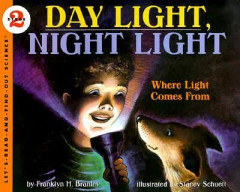
Day light, night light: where light comes from
Moonlight is really sunlight! Did you know that the moon doesn't make its own light? Instead, it receives light from the sun and reflects it to us on the Earth. Read and find out about how the sun, the stars and light bulbs make light so we can see.Did you know that moonlight is really sunlight? The moon can't make its own light, so it receives light from the sun and then sends it to us here…
- Edition
- -
- ISBN/ISSN
- 9780064451710
- Collation
- 57 p. ; ill. ; 26 cm
- Series Title
- Let's-Read-and-Find-Out Science: Stage 2
- Call Number
- 535 BRA d

It's a gas : the sublime and elusive elements that expands our world
Gases are all around us--they fill our lungs, power our movement, create stars, and warm our atmosphere. Often invisible and sometimes odorless, these ubiquitous substances are also the least understood materials in our world, and always have been. It wasn't long ago that gases were seen as the work of ancient spirits: the sudden closing of a door after a change in airflow signaled a ghost's…
- Edition
- -
- ISBN/ISSN
- 9780358157151
- Collation
- 280 p. ; ill. ; 22 cm
- Series Title
- -
- Call Number
- 530 MIO i
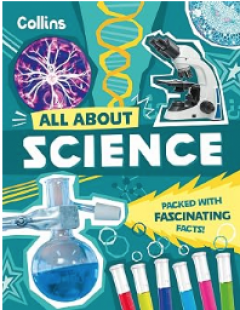
All about science
Find out ALL ABOUT: States of matter, atomic structure, and the periodic table Energy, forces, and laws of motion Cells, DNA, and photosynthesis Scientific advances and amazing inventions And lots more!
- Edition
- -
- ISBN/ISSN
- 9780008737542
- Collation
- 96 p. ; ill. ; 25 cm
- Series Title
- -
- Call Number
- 500 NEW a
 Computer Science, Information & General Works
 Philosophy & Psychology
 Religion
 Social Sciences
 Language
 Pure Science
 Applied Sciences
 Art & Recreation
 Literature
 History & Geography